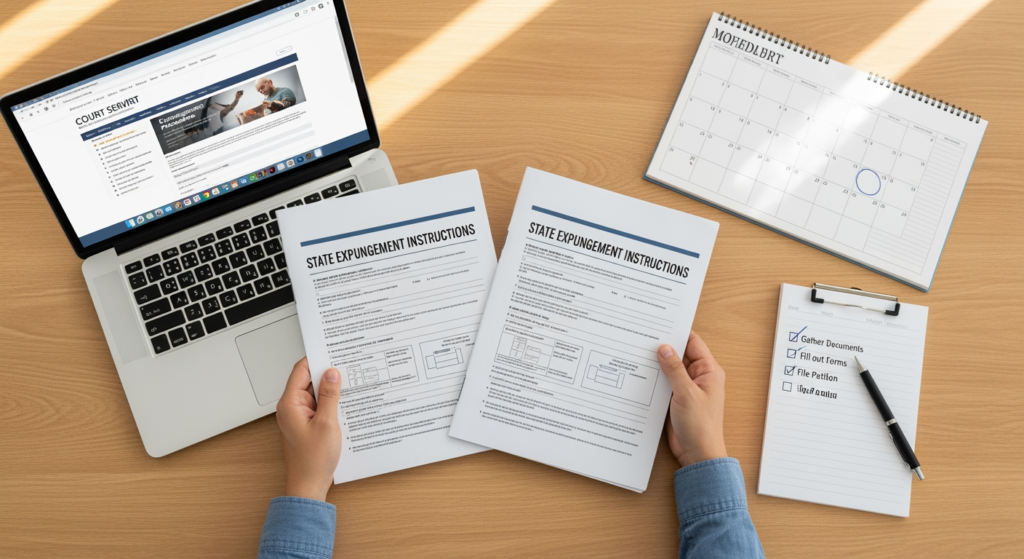
Expungement can sound straightforward—“clear your record”—but the rules change dramatically depending on where your case happened. This guide is for anyone trying to understand expungement by state: people with prior arrests or convictions, families helping a loved one, and readers researching how record-clearing works in the U.S. The details matter because eligibility, waiting periods, required paperwork, and even what “expungement” means can vary from one jurisdiction to the next. If you’re doing summer job searches, housing applications, or professional licensing paperwork, these differences can affect what shows up on background checks and when.
For a broader foundation on how defense processes connect to rights and outcomes, see Understanding Criminal Defense Procedures: An Overview.
Key Points to Know First
- “Expungement” isn’t a single national rule: states use different definitions, and some use alternatives like sealing, set-asides, or certificates.
- Eligibility varies widely: what qualifies may depend on the charge type, case outcome, and whether you have other convictions.
- Waiting periods and “clean time” differ: some states require years after completion of a sentence; others allow earlier relief for certain outcomes.
- Process and paperwork are state-specific: forms, filing locations, fees/waivers, and notice requirements can be different even for similar cases.
- Background-check results can still vary: even after relief, what employers or agencies can see may depend on state law and the type of check.
How Expungement Rules Change From State to State
At a high level, expungement is a legal process that limits access to certain criminal records. But states use different tools and terminology. In one state, “expungement” might mean the record is destroyed or treated as if it never happened for most purposes. In another, it may mean the record is sealed from public view but still accessible to courts, law enforcement, or certain licensing boards.
Because there’s no single nationwide expungement code, states build their own systems around a few recurring questions:
- What records can be cleared? Arrests without conviction, dismissed cases, diversion outcomes, misdemeanors, and some felonies may be treated differently.
- What disqualifies a person? Prior convictions, pending charges, or certain offense categories may affect eligibility.
- What must be completed first? Many states require completion of probation/parole, payment of restitution, or other sentence terms before a petition is allowed.
- What is the legal effect? The state’s statute determines what employers, landlords, and agencies may ask—and what you may disclose—after the record is cleared or sealed.
Common record-clearing terms you’ll see
- Expungement: Often used as a catch-all term, but the legal effect depends on the state.
- Sealing: Typically restricts public access while keeping the record available for limited, authorized purposes.
- Set-aside/vacatur: May change the status of a conviction in court records; effects vary by state.
- Certificates of rehabilitation/relief: Sometimes used to reduce barriers even when a record can’t be fully cleared.

The Real-World Consequences of State-by-State Differences
State differences aren’t just legal trivia—they can change your timeline, costs, and expectations.
- Timing: A person with the same type of case outcome may be able to file quickly in one state but must wait much longer in another.
- Cost and complexity: Filing fees, fingerprinting requirements, service/notice rules, and hearing practices vary. Some processes are paperwork-heavy; others are more standardized.
- Employment and licensing impacts: Some states limit what employers can consider after sealing/expungement, while professional licenses may still require disclosure in certain circumstances.
- Housing and education: Tenant screening and school-related checks may pull different data sources; the practical effect can depend on how the state restricts access to records.
- Interstate issues: If you live in a different state than where the case occurred, you generally still need to follow the rules of the state where the record exists.
Common Mistakes People Make When Comparing States (Checklist)
- Assuming “expunged” means identical results everywhere: in many places, it’s closer to limited access than total erasure.
- Mixing up the case location: eligibility usually depends on the jurisdiction where the record was created, not where you live now.
- Overlooking case outcome details: dismissal, diversion, deferred adjudication, and conviction can be treated very differently.
- Missing waiting-period triggers: some states measure from arrest date, others from disposition, and many from completion of sentence terms.
- Forgetting financial obligations: unpaid restitution, fines, or fees can pause or block eligibility in some systems.
- Using unofficial forms or outdated instructions: courts often require specific forms and service steps; the wrong paperwork can cause delays.
A Smart Way to Research Your State’s Expungement Process (Checklist)
- Identify where the record is filed: confirm the state (and sometimes county/court) tied to the arrest or case.
- Pull your case information: gather the charge(s), disposition, sentence terms, and completion dates if available.
- Look up the state’s terminology: determine whether the state uses expungement, sealing, set-aside, or multiple options.
- Map eligibility requirements to your facts: focus on offense type, case outcome, prior record rules, and waiting periods.
- Check filing steps: confirm required forms, filing location, fees/waivers, service/notice requirements, and whether a hearing is typical.
- Plan for proof: collect documents that may be requested (disposition, completion of probation, payment records).
- Document your questions: write down uncertainties (e.g., “Does diversion count as a conviction here?”) to discuss with a qualified attorney.
Professional Insight: What Most People Miss About “Clean Records”
In practice, we often see people focus on whether they can file a petition, but underestimate the second half of the issue: what the relief actually changes in daily life. Two states can both offer “expungement,” yet one mainly limits public access while another provides broader relief—especially for employment screening—depending on the record type and the agency running the check.

When It’s Time to Talk to a Lawyer
This article is general information, not legal advice. Because expungement eligibility is highly fact-specific and state-dependent, consider professional help if any of the following apply:
- You’re unsure of the disposition: the difference between dismissal, diversion, and conviction can change everything.
- You have multiple cases or multiple states involved: overlapping timelines and eligibility rules can become complicated quickly.
- Your record includes potentially excluded offense categories: some states limit relief for particular charges or sentence types.
- You need the record cleared for a specific purpose: licensing, immigration, firearms rights, or sensitive employment may involve additional rules.
- You’re facing a deadline you can’t control: for example, an upcoming background check for a job or housing application—an attorney can explain realistic timelines in that jurisdiction.
Frequently Asked Questions
Is clearing a record the same thing as sealing it?
Not always. Some states use different terms for different outcomes. “Sealing” often means the record is hidden from the public but still available to certain government entities; “expungement” can mean a stronger form of relief in some jurisdictions, but definitions vary.
Can an arrest that didn’t lead to a conviction be removed?
Many states provide a way to limit access to records when a case ended without a conviction, such as dismissal or acquittal. The eligibility rules and filing steps depend on the state and the specific case outcome.
How long do people usually have to wait before filing?
Waiting periods are set by state law and can depend on the charge level, disposition, and completion of sentence terms. Some states measure time from the end of probation or payment of restitution, while others use different triggers.
Will a cleared record disappear from every background check?
It depends on the state’s legal effect and the type of background check being run. Some checks rely on public court data, while others may access different repositories. A lawyer can explain what the relief typically changes in that jurisdiction.
Do I file where I live now or where the case happened?
Usually, you file in the jurisdiction where the record exists—often the state (and sometimes the specific court) that handled the case. Living elsewhere doesn’t usually change which rules apply.
Where to Go from Here
Expungement rules vary because states define eligibility, waiting periods, and legal effects differently. The practical impact can show up in timelines, costs, and what background checks reveal. If you’re comparing options across jurisdictions, start by confirming where the record sits and what that state calls the type of relief you’re seeking. For advice tailored to your situation, consider speaking with a qualified attorney in the relevant state.
Learn More About Our Services
Discover how we can help you achieve your goals.