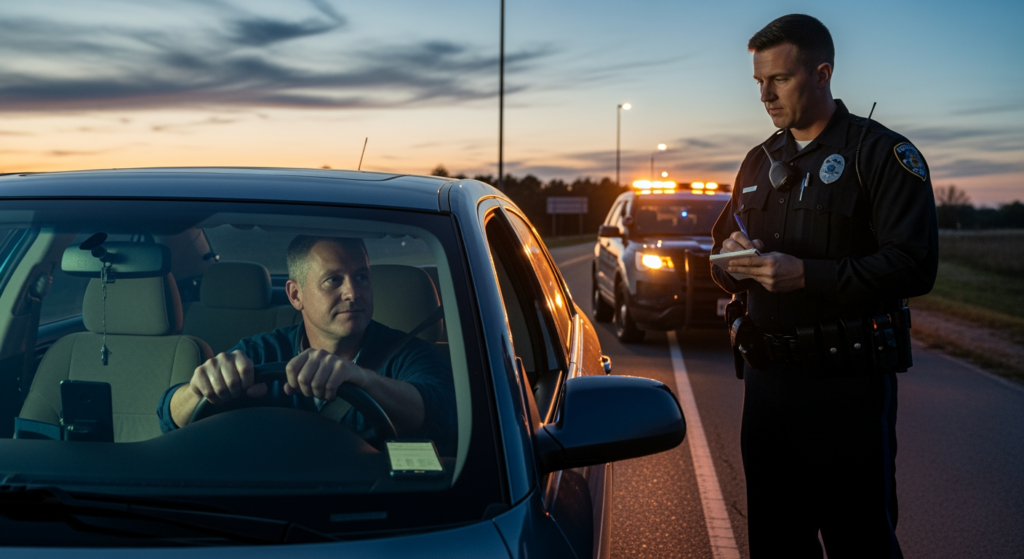
Distracted driving stops can feel like a moving target: what officers look for, what gets documented, and what happens next may vary by jurisdiction and department policy. If you drive for work, commute daily, or you’re a parent shuttling kids between activities, understanding the current enforcement trend can help you avoid surprises during a traffic stop—and avoid accidentally making the situation harder. As spring brings more cars back onto the roads and longer daylight commutes, many drivers notice increased traffic enforcement around common distraction behaviors. This overview explains what’s happening in traffic enforcement, why it matters, and how to navigate the process in a calm, rights-aware way—without offering legal advice.
For a broader foundation on how defense concepts fit into the system, see Understanding the Criminal Justice Process.
Bottom Line Upfront: What to Expect at the Window
- Observation drives the stop: Officers generally initiate these stops based on what they believe they saw (for example, phone-in-hand behavior), not on a device “scan.”
- The stop is usually brief, but documentation can be detailed: Notes may include lighting, traffic conditions, where your hands were, and your statements.
- You may be asked about your phone use: How you answer (or whether you choose to answer) can affect what ends up in the report.
- Outcomes vary: Depending on local law and the situation, the result could be a warning, citation, or—in some cases—additional investigation if other issues arise.
- Evidence questions matter: A citation may rely on officer observations, your admissions, or other context; what counts and how it’s challenged is jurisdiction-specific.
What’s Driving the Rise in Phone-Distraction Enforcement
Across the traffic-offense landscape, enforcement attention has increasingly centered on everyday distraction behaviors—especially handheld phone use. This isn’t just about “texting.” Many jurisdictions treat multiple activities as risky distractions, such as scrolling, typing, holding a phone near eye level, or interacting with apps while the vehicle is in motion. Some agencies also emphasize high-visibility enforcement periods (extra patrols, targeted corridors, and increased stops near intersections), which can make enforcement feel more noticeable even when underlying laws haven’t changed.
From an industry-news perspective, the trend is less about a single new rule and more about how existing rules are being enforced: clearer officer training on articulating observations, more precise report writing, and increased attention to driver behavior at low speeds (stoplights, stop-and-go traffic) where many people assume “it doesn’t count.”

The Real-World Consequences: More Than a Ticket
A traffic stop for suspected distraction can have ripple effects beyond the immediate citation. Even when the stop ends quickly, the interaction can create a record that matters later—especially if there’s a dispute about what happened or if a driver has prior traffic history.
- Time and logistics: A stop can mean missed work, childcare complications, or delays—small disruptions that add up.
- Financial impact: Citations can involve fines and fees; in some jurisdictions, repeat offenses can increase penalties.
- Insurance considerations: Some insurers may treat certain moving violations as higher risk, which can affect premiums (policy rules vary).
- Escalation risk: If an officer believes there are other issues (impairment indicators, suspended license, outstanding warrants), a stop can expand in scope.
- Work-related driving: Commercial drivers and employees who drive company vehicles may face employer policies in addition to legal consequences.
Common Missteps During Phone-Distraction Stops (Checklist)
- □ Reaching for the phone as the officer approaches: Even if you’re trying to “put it away,” it can look like concealment or continued use.
- □ Arguing roadside about what the officer saw: Debates in the moment can increase tension and may produce statements that get documented.
- □ Over-explaining: Long narratives (“I was just checking maps, not texting”) can accidentally become an admission depending on local definitions.
- □ Ignoring basic stop etiquette: Sudden movements, refusing to provide required documents, or failing to follow instructions can create separate issues.
- □ Assuming the law is identical everywhere: Hands-free rules, exceptions, and definitions differ by state and sometimes by vehicle type.
- □ Posting about the stop in real time: Sharing details publicly can create a permanent record that’s easy to misinterpret later.
A Smart, Low-Drama Game Plan (Checklist)
- □ Pull over safely and promptly: Use a turn signal, choose a well-lit area when possible, and stop in a safe spot.
- □ Set the phone down visibly: If it’s in your hand, place it face-down in the console or passenger seat and keep your hands visible.
- □ Keep your movements slow and predictable: Wait to retrieve documents until asked, and tell the officer what you’re doing before reaching.
- □ Be polite and concise: Provide identification and required documents; keep answers short and factual.
- □ Write down details afterward: As soon as you’re safe, note location, time, traffic conditions, and what was said—your memory fades fast.
- □ Review the citation carefully: Confirm the statute/description, date, location, and any listed court or payment instructions.

Professional Insight: The “Small Admission” That Becomes the Whole Case
In practice, we often see that the turning point in distraction-related citations isn’t a dramatic piece of evidence—it’s a casual statement made during a stressful moment. Drivers sometimes try to be helpful (“I only glanced down for a second”), not realizing that the officer may document that phrasing as confirmation of the prohibited behavior under that jurisdiction’s rule. Staying calm, keeping explanations minimal, and focusing on the immediate requirements of the stop can reduce misunderstandings.
When It’s Time to Talk to a Lawyer
Because traffic laws and procedures vary, it can be useful to get professional guidance when the stakes go beyond a routine ticket. Consider seeking legal help if:
- You’re facing a license suspension risk or you already have points/violations that could compound.
- The stop expanded into a search, impairment investigation, or additional charges.
- You believe the citation is factually incorrect (wrong vehicle, wrong driver behavior, inaccurate location/time).
- Your job depends on driving (commercial driving, delivery, rideshare, company vehicle policies).
- You have a court date and you’re unsure what to expect or what documents to bring.
Common Questions About These Stops
Can an officer pull me over for briefly holding my phone at a red light?
It depends on the jurisdiction’s definition of prohibited use and whether the vehicle is considered “in operation” while stopped in traffic. Many areas treat handheld use at lights as enforceable, but the details vary.
Do I have to hand over my phone during a traffic stop?
Policies and legal standards differ by jurisdiction and situation. In many contexts, drivers are required to provide identification and vehicle documents, but phone access raises separate legal questions. A local attorney can explain how this typically works where you are.
What kind of evidence is used to support a phone-related citation?
Often it’s based on the officer’s observations and notes, and sometimes on driver statements. In some cases, other context (like where the phone was located) may be described. What is admissible and how it’s weighed depends on local rules.
Will a hands-free mount prevent a ticket?
A mount may reduce the need to handle the device, but it doesn’t automatically make all interaction lawful. Some jurisdictions restrict certain types of use even when the phone is mounted.
If I get cited, do I automatically have to go to court?
Not always. Some citations can be resolved without appearing in court, while others require a court date. The citation paperwork typically lists the next step, and local court procedures may also apply.
Taking the Next Step With Clear Expectations
Enforcement attention on driver distraction has become more visible, and stops may feel more common even when the underlying laws are familiar. Knowing how these stops typically unfold can help you stay calm, avoid unforced errors, and keep the interaction focused. If the situation involves higher stakes—like compounding violations, job-related driving, or additional allegations—getting qualified guidance can clarify your options in your jurisdiction.
Get in Touch
Fill out our quick form and we’ll get back to you within 24 hours.