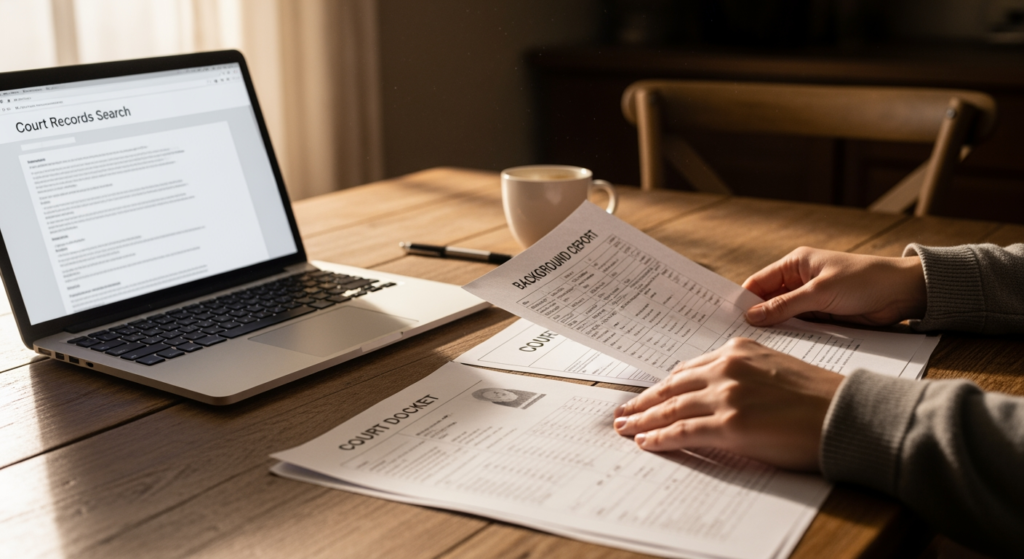
Background checks can feel like a black box—especially if you’re dealing with an arrest, a pending charge, or an old case that still seems to follow you around. This guide is for beginners who want a clear, practical overview of background check basics in the context of criminal cases and everyday life (jobs, housing, licensing, and more). It matters because what shows up on a report can affect opportunities, timelines, and the steps you may want to research next. During summer travel and seasonal hiring, background checks often come up more frequently than people expect.
For a broader foundation on how criminal matters move through the system, see Understanding Criminal Defense Procedures: An Overview.
The Essentials: Background Checks in Plain English
- A background check is a search for records—often including criminal history—that may appear in databases or court files.
- Different checks pull different sources: an employer’s screening may differ from a government fingerprint-based check.
- Arrests and charges may appear even without a conviction, depending on the source and how the report is built.
- Errors happen (mixed identities, outdated case status, duplicate entries), so reviewing details matters.
- Rules vary by jurisdiction and purpose, including what can be reported and how disputes work.
How Criminal-Record Screening Typically Works
In simple terms, a background check is a process where a person or company looks for records tied to your identity—often your name, date of birth, address history, and sometimes fingerprints. In criminal cases, the records people worry about most usually fall into a few buckets:
- Arrest records: documentation that an arrest occurred.
- Charges: the offenses alleged by law enforcement or prosecutors.
- Case outcomes: dismissals, convictions, acquittals, diversion programs, or other resolutions.
- Sentencing information: probation, jail time, fines, or conditions (when applicable).
Who runs the check matters. A private screening company may compile information from multiple sources, while certain government or regulated checks may rely on fingerprint submissions. Because sources and update speeds differ, two reports about the same person can look different.

Where Background Check Results Can Affect You
Criminal-history information can show up in everyday situations, and the impact often depends on the decision being made and the policies involved. Common areas include:
- Employment: hiring, promotions, or roles involving trust, driving, finance, or vulnerable populations.
- Housing: rental applications and property management screening.
- Professional licensing: regulated fields may require disclosures or additional review.
- Education and volunteering: programs that screen for safety or compliance.
- Immigration-related processes: certain records may trigger additional scrutiny (rules can be complex and fact-specific).
Even when a record is old or the case ended favorably, the practical problem is often the same: decision-makers may rely on what’s on the report, not what you remember happening.
Common Missteps That Create Bigger Problems (Checklist)
- Assuming “no conviction” means “nothing will show” — some searches can still display arrests or pending cases.
- Ignoring identity details — similar names, old addresses, or incomplete identifiers can lead to mismatches.
- Not checking the case status — reports can lag behind real court updates, so outcomes may be missing or wrong.
- Over-disclosing without context — sharing extra details can create confusion; many applications ask narrow questions.
- Missing dispute windows or instructions — some screening processes have specific steps and timelines for corrections.
- Using random online “instant check” sites — some are incomplete, outdated, or hard to correct if wrong.
A Smart, Beginner-Friendly Action Plan (Checklist)
- Identify the purpose of the check (job, housing, licensing, court-related) because that affects what’s searched.
- Ask what type of check is being run (name-based vs. fingerprint-based) and what sources are used, if available.
- Gather your own case details: court name, case number (if known), approximate dates, and the final outcome.
- Review for accuracy: spelling, date of birth, case disposition, and whether the record belongs to you.
- Document discrepancies with copies or screenshots of the incorrect entry and any court documentation you have.
- Learn your dispute options: many screening setups have a formal process to challenge errors or update status.
- Research record-clearing concepts (like sealing or expungement) as an educational next step; eligibility rules vary widely.
Professional Insight: What People Often Miss
In practice, we often see confusion come from the gap between what the court record says and what a third-party report displays. A case can be resolved, but a database entry may not reflect the final disposition yet—or it may list the charge without clearly showing the outcome. That’s why accuracy checks and documentation tend to matter as much as the underlying event.

When It’s Time to Talk to a Qualified Attorney
This article is educational and not legal advice. Still, there are situations where getting individualized legal guidance can be especially important, such as:
- You’re facing a pending charge and a check is coming up for work, housing, or licensing.
- A report appears wrong (wrong person, wrong outcome, duplicate cases) and you’re not sure how to correct it.
- You’re considering sealing or expungement and need to understand eligibility, process, and consequences in your jurisdiction.
- The record involves sensitive categories (for example, domestic violence allegations or offenses affecting firearms or immigration), where rules can be highly specific.
- You’re asked to disclose information and the wording is unclear (e.g., “ever arrested” vs. “ever convicted”).
Common Questions About Criminal-Record Checks
Can an arrest show up even if the case was dismissed?
It can, depending on the source of the information and how the report is compiled. Some systems may list arrests or charges separately from the final outcome, and updates may take time to appear.
Why do two screening reports sometimes show different results?
Different providers use different databases, search methods, and update schedules. One report might rely on name-based searches and public record pulls, while another may use fingerprint-based sources or different jurisdictions.
What’s the difference between sealing and expungement?
These terms can mean different things depending on the state. Generally, they refer to legal processes that limit access to or remove certain records from public view, but eligibility and effects vary by jurisdiction.
How can I tell if a record is actually mine?
Compare identifiers like full name, date of birth, addresses, and case details. If something doesn’t match, it may be an error or a mixed file, and you may want to gather court documentation before disputing.
Do I have to disclose everything that appears on a report?
Disclosure rules depend on the application question and applicable laws or policies. Some questions ask only about convictions, while others ask about arrests or pending cases. If you’re unsure, individualized legal guidance can help clarify what applies to your situation.
Where to Go from Here
Understanding background checks starts with knowing what records exist, where they come from, and why different reports can look inconsistent. If you’re preparing for a job, housing, or licensing review, focusing on accuracy and documentation is often the most practical first step. And if a pending case or confusing record is involved, learning how the process works can help you ask better questions and avoid preventable mistakes.
Learn More About Our Services
Discover how we can help you achieve your goals.