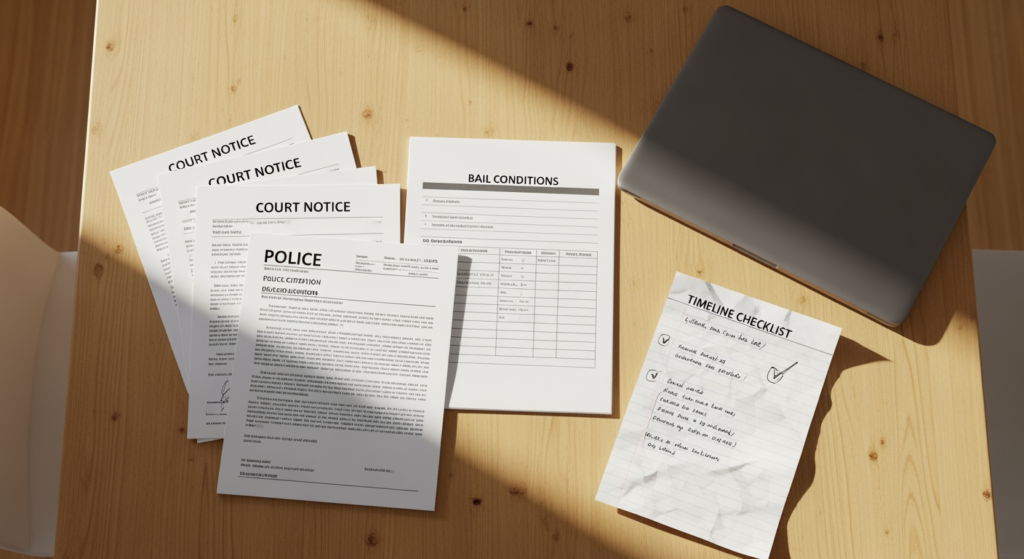
Meeting a criminal defense lawyer for the first time can feel like trying to pack for a trip when you don’t know the weather—easy to overpack, easier to forget the one thing you actually need. This attorney consultation checklist is for anyone preparing for an initial defense attorney meeting (or helping a loved one do the same) and wants to use the time well without guessing what matters. The right documents can help a lawyer understand what happened, spot deadlines, and explain the process more clearly—while missing paperwork can slow things down or create confusion. If you’re organizing materials during summer travel season, building a simple folder now can reduce last-minute scrambling later.
For a broader overview of how the criminal process typically moves from investigation to court appearances, see Understanding Criminal Defense Procedures: An Overview.
At a Glance: What to Bring and Why
- Bring what you have, not what you wish you had. Even partial paperwork can help a lawyer identify what’s missing.
- Prioritize court and police documents first. These often contain case numbers, charges, and deadlines.
- Organize items by timeline. A simple chronological order can make your story easier to evaluate.
- Include communication records carefully. Save relevant texts/emails, but avoid editing or “cleaning up” messages.
- Prepare a short written summary. A one-page timeline can prevent important details from getting lost in conversation.
- Ask what else is needed for your jurisdiction. Procedures and required forms can vary by court and state.
How a Defense Consultation Uses Your Documents
An initial consultation is typically a fact-gathering and issue-spotting meeting. The lawyer reviews what you’ve received from law enforcement or the court, listens to your account, and identifies immediate procedural concerns (like upcoming dates or conditions you must follow). Documents help the attorney confirm basics—such as the alleged offense, the court handling the case, and any restrictions that apply—so the conversation is grounded in what’s actually on file.
Just as important, your paperwork can help the attorney explain next steps in plain language: what the listed charges generally mean, what hearings may be scheduled, and what information may be needed to investigate or negotiate later. This is educational information, not legal advice; only a lawyer who reviews your specific situation can advise you.
The Practical Stakes: Time, Conditions, and Paper Trails
Being prepared isn’t about “winning” a consultation—it’s about reducing avoidable friction. If you bring the right materials, you may spend less time reconstructing basics and more time understanding the process and questions to ask next.
- Time: Court dates, response deadlines, and appointment schedules can move quickly once paperwork is issued.
- Compliance: Release conditions, protective orders, or no-contact terms can create serious consequences if misunderstood.
- Cost and efficiency: Clear documentation can reduce repeated requests for the same information.
- Accuracy: Written records can prevent memory gaps from becoming inconsistencies later.
Mistakes That Derail First Meetings (Checklist)
- ✓ Showing up with only a verbal story — Bring paper or digital copies of anything you received (summons, tickets, notices, bond paperwork).
- ✓ Leaving documents scattered across apps and inboxes — Consolidate screenshots, emails, and PDFs into one folder so nothing gets missed.
- ✓ Highlighting or writing on originals — If you want to annotate, work from copies to preserve the original condition of documents.
- ✓ Editing message threads — Avoid deleting or “fixing” texts/emails; keep the context intact and note what’s relevant.
- ✓ Bringing irrelevant paperwork while missing key items — A single court notice can matter more than a stack of unrelated records.
- ✓ Forgetting to list prior cases or active orders — If applicable, prior or pending matters can affect scheduling and obligations.
Your Attorney Consultation Checklist (Medium-Priority, High-Impact)
- ✓ Government-issued ID — Useful for intake and confirming correct spelling and personal details.
- ✓ All court paperwork — Summons/complaint, notices of hearing, arraignment paperwork, docket sheets, or any document with a case number.
- ✓ Charging documents (if you have them) — Anything listing alleged offenses, statutes, or counts.
- ✓ Release/bond/bail documents — Include conditions of release, contact restrictions, travel limits, and reporting requirements.
- ✓ Police documents you received — Citations, property receipts, tow/impound paperwork, or inventory sheets.
- ✓ A one-page timeline — Date/time, location, who was present, what happened before/during/after, and what you remember being said.
- ✓ Witness and contact list — Names, phone/email, relationship, and what each person may know (keep it factual).
- ✓ Relevant photos/videos — Keep originals when possible; note when and how they were created.
- ✓ Communication records — Screenshots or exports of relevant texts/emails/DMs (include dates and full threads if possible).
- ✓ Work/school schedule constraints — Helps plan appearances and meetings; bring documentation if you have it.
- ✓ Immigration or licensing concerns (if applicable) — Bring any documents showing status or professional licensing, since collateral consequences can matter.
- ✓ List of questions — Examples: “What are the next procedural steps?” “What documents should I request?” “What are common timelines here?”

Professional Insight: What Most People Miss
In practice, we often see people focus on proving their side of the story during the first meeting and accidentally overlook the “administrative” pages—like hearing notices, bond conditions, or case-number documents. Those pages can drive the immediate timeline and obligations, so bringing them (even if they look boring) can make the consultation far more productive.
When It’s Time to Seek Professional Help
Consider getting qualified legal help promptly if any of the following apply:
- ✓ You have an upcoming court date and you’re unsure what it is or what happens there.
- ✓ You’re subject to release conditions (no-contact, travel limits, monitoring, reporting) and need clarity on what they require.
- ✓ Law enforcement is trying to interview you again or requests additional statements or access to devices/accounts.
- ✓ There’s a protective order or alleged violation involved, even if the facts are disputed.
- ✓ The situation affects your job, license, school, or immigration status and you need guidance specific to your circumstances.
Common Questions Answered
Do I need every document before I meet with a lawyer?
No. Bringing what you already have is usually better than waiting. A lawyer can often tell you what to request next based on the documents you do have.
Is it okay to bring screenshots of texts and emails?
Often, yes. If possible, keep full threads with dates and avoid altering or selectively editing messages. A lawyer can explain what format is most useful for review.
What if I lost my court notice or don’t know my case number?
Write down everything you do know (your name as listed, the court location if known, and any prior dates). A lawyer may be able to explain common ways people obtain missing case information in their jurisdiction.
Should I bring social media posts or videos related to the incident?
If they’re relevant, preserve them. Make a note of where they appear and when they were posted. A lawyer can discuss how such materials are typically treated and what to avoid doing with them.
Will the first meeting include a full strategy or outcome prediction?
Usually, the first meeting is an initial assessment and information-gathering session. A lawyer may explain general options and process, but predicting outcomes can be difficult without full discovery and jurisdiction-specific details.
Where to Go from Here
A well-organized first meeting can help you understand the process, reduce confusion about deadlines, and identify what information still needs to be gathered. Use the checklist above to build a simple folder (paper or digital), keep items in chronological order, and bring a short timeline plus your questions. If you’re missing documents, don’t panic—start with what you have and note what you don’t. This content is for general educational purposes and isn’t legal advice.
Want More Information?
Download our free resource to learn more about this topic.