Summer travel can turn a simple road trip into a legal headache if alcohol ends up in the wrong place inside a vehicle. If you’re a driver, passenger, rideshare user, or the “designated logistics person” for a group getaway, understanding open container laws can help you avoid an avoidable traffic stop, citation, or worse. Rules vary by state, and what seems like a harmless leftover drink from a beach rental or tailgate can raise questions during a stop.
This article is for educational purposes only—not legal advice. For a broader grounding in how criminal processes and rights generally work, see Understanding Criminal Defense Procedures: An Overview.
Bottom Line Before You Hit the Road
- Most states restrict alcohol containers in passenger areas of a vehicle, even if the driver is sober.
- “Open” can mean more than “uncapped”—partially consumed, unsealed, or readily accessible containers may be treated similarly, depending on the jurisdiction.
- Passengers aren’t always “in the clear”; some states cite passengers, some cite drivers, and some do both.
- Where you store alcohol matters; trunks or locked compartments are commonly treated differently than cupholders or back seats.
- RV, limo, and rideshare situations can be different; exceptions (if any) are state-specific and fact-specific.
How Open Container Laws Usually Work in Vehicles
In many jurisdictions, these rules focus on possession and location—not just whether someone is actively drinking. The core idea is to limit alcohol being accessible in the passenger compartment, especially during operation of the vehicle.
Key concepts you’ll often see discussed include:
- Passenger area vs. non-passenger area: The “passenger area” may include the front and back seats and any area readily reachable from them. A trunk, locked toolbox, or rear cargo area that isn’t accessible from inside may be treated differently.
- What counts as a “container”: Beer cans, wine bottles, mixed-drink cups, and sometimes resealed containers can raise issues depending on state definitions.
- Accessibility: A sealed bottle in a bag on the floor may be treated differently from a partially consumed drink in a cupholder.
Because definitions and exceptions vary, the same scenario (a leftover bottle from dinner, a cooler behind the driver’s seat, an opened seltzer in a beach bag) can be treated differently across state lines.

Why Summer Road Trips Make These Stops More Likely
Warm-weather travel tends to involve group outings, rentals, beach days, festivals, and tailgates—situations where drinks and coolers are more likely to be present. That increases the chance that a container ends up in a cupholder “just for a minute,” or that leftovers get tossed into the back seat during a rushed checkout.
Practical stakes can include:
- Time: A stop can derail travel plans, delay check-ins, or complicate returning a rental vehicle.
- Cost: Fines, fees, and potential insurance consequences vary widely by jurisdiction and circumstances.
- Escalation risk: What begins as a container issue may lead to broader questions during a stop, depending on what an officer observes.
- Complications for visitors: If you’re traveling, handling a citation from another state can be more burdensome than dealing with one at home.
Common Summer Mistakes That Trigger Open-Container Problems (Checklist)
- Leaving “one last drink” in the cupholder: Even if no one is drinking, visible alcohol can draw attention and raise suspicion.
- Assuming passengers can drink everywhere: Some states restrict passenger consumption in vehicles; others focus on possession—either way, it can create exposure.
- Storing alcohol in easy reach: Back seats, door pockets, and floorboards are often treated as readily accessible areas.
- Using unsealed “to-go” cups in the car: Mixed drinks, tumblers, and party cups can be treated as containers even when the contents aren’t obvious.
- Forgetting about leftovers after events: Beach rentals, hotel checkouts, and tailgates often end with hurried packing and missed items.
- Crossing state lines without re-checking rules: A setup that seemed fine in one state may be treated differently in the next.
A Smart Travel Setup for Alcohol Transport (Checklist)
- Keep alcohol sealed and out of reach: When possible, store it in the trunk or a closed cargo area not accessible from the cabin.
- Use a dedicated cooler with a lid: Treat it as “transport,” not “service”—and keep it away from passenger seating areas when feasible.
- Do a 60-second “seat sweep” before driving: Check cupholders, door pockets, under seats, and floor mats—especially after stops.
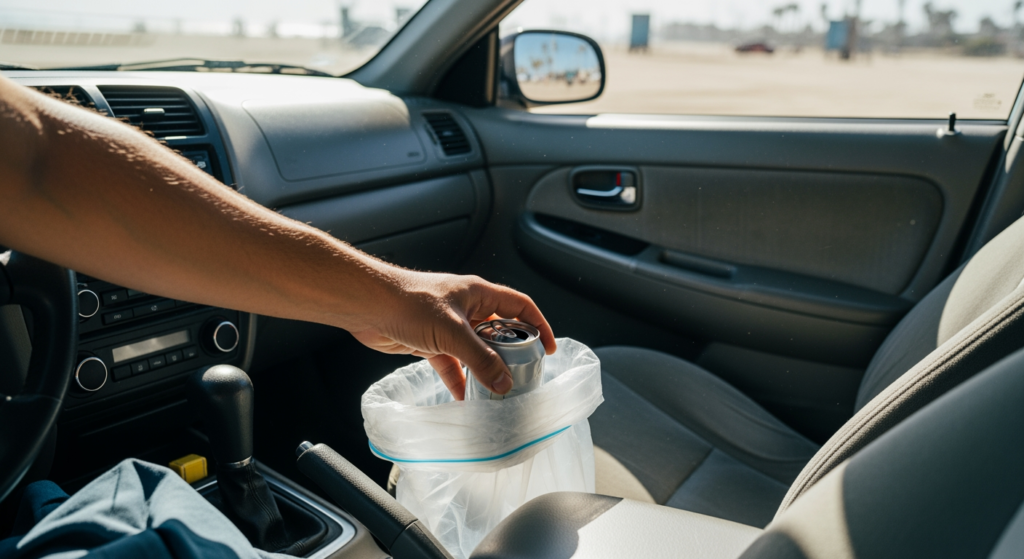
- Separate trash from transport: Put empties in a sealed trash bag and keep it with other waste, not mixed with luggage where it’s easily visible.
- Be cautious with rentals: Before returning a rental car, check under seats and in door bins for forgotten containers.
- If you’re unsure, pause and reset: When rules are unclear, the lowest-risk approach is typically sealed, stored, and inaccessible.

Professional Insight: The Detail People Miss Most
In practice, we often see problems start with something small and unintentional—like a passenger setting a drink down while loading bags or a driver forgetting an empty can in a door pocket after a beach day. The issue isn’t just consumption; it’s how quickly a “harmless leftover” can become a point of focus during a traffic stop.
When It’s Time to Talk to a Lawyer
Because consequences and defenses depend on the exact facts and local law, consider getting qualified legal help if any of the following apply:
- You were cited or arrested and don’t understand what the charge requires (possession vs. consumption, driver vs. passenger responsibility).
- The stop involved field sobriety tests, a breath test request, or a DUI/DWI investigation in addition to a container allegation.
- You were traveling and the case is in a different state than where you live.
- You believe the container was not accessible (for example, stored in a trunk) but were cited anyway.
- You have prior traffic or alcohol-related matters and want to understand potential compounding effects.
Common Questions Answered
Does an empty can or bottle still matter during a traffic stop?
It can. Some jurisdictions focus on whether a container is open or shows signs of prior consumption, while others focus on possession in the passenger area. An empty container may still lead to questions and, in some places, a citation depending on the local definition and circumstances.
If the driver isn’t drinking, can a passenger have alcohol in the car?
Not always. Some states restrict passenger drinking or possession in certain parts of the vehicle. Responsibility can also vary—sometimes the passenger is cited, sometimes the driver, and sometimes both.
Is a resealed bottle considered “open”?
It depends on how the jurisdiction defines an open container. Some places treat any previously opened container as “open” even if it’s re-capped, while others use different criteria. The safest approach is usually to keep alcohol sealed as sold and stored out of reach.
Do these rules apply in rideshares or taxis?
Rules can differ by state and by vehicle type. Some places have exceptions for certain for-hire vehicles, while others do not. If you’re riding with others, it’s still wise to understand local restrictions before bringing alcohol into the vehicle.
What should I do if I’m cited while traveling?
Read the citation carefully, track any listed court date or response instructions, and consider speaking with a qualified attorney in the jurisdiction where the citation was issued. Handling an out-of-state matter often involves extra logistics and deadlines.
Where to Go from Here
Travel season is when small oversights—like a forgotten cup or a half-finished drink—most often turn into big inconveniences. Keeping alcohol sealed, stored away from passengers, and doing a quick pre-drive check can reduce avoidable risk. If you’re cited, the details of where the container was, who had access to it, and what the officer observed can matter. For guidance specific to your situation, a licensed attorney can explain how local rules apply.
Book Your Consultation
Schedule a free consultation with our experts.