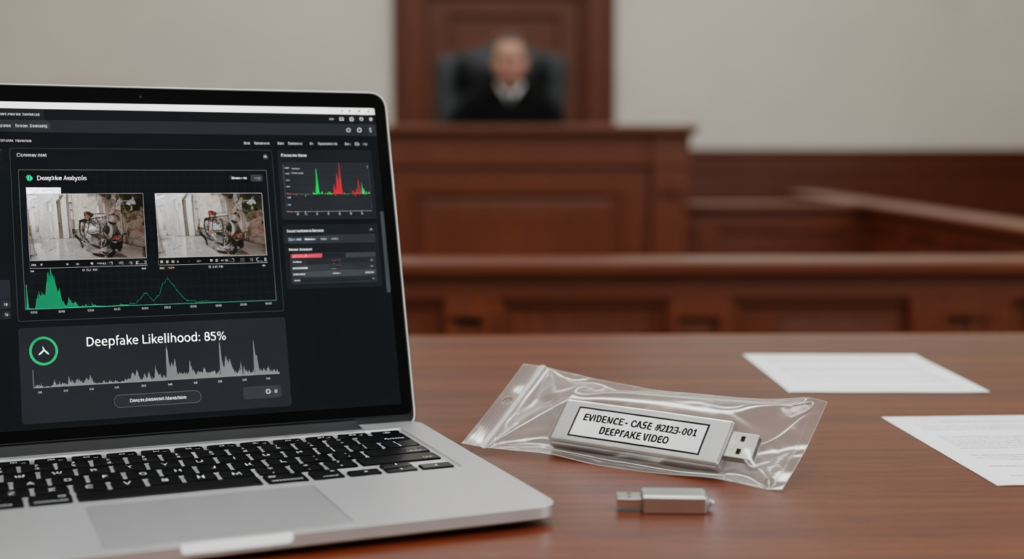
Courts, lawyers, and investigators are increasingly encountering AI evidence—materials created by or analyzed with artificial intelligence, from deepfake videos to algorithm-generated “risk” outputs. If you’re a defendant, a family member, a student, or simply trying to understand criminal defense basics, this trend matters because it can shape what information gets collected, how it’s interpreted, and what ends up in front of a judge or jury. During summer travel and packed event seasons, more daily life is captured on cameras and apps, which can increase the amount of digital material that could later be questioned in a case. The big question for 2026 isn’t whether AI will show up in criminal matters—it’s how courts will evaluate reliability, transparency, and fairness when technology is part of the proof.
For a step-by-step foundation on how criminal cases typically move from investigation to court, see Understanding Criminal Defense Procedures: A Comprehensive Overview.
Bottom Line: What AI-Driven Proof Usually Means
- “AI evidence” can be created, enhanced, or interpreted by software—and each stage raises different reliability questions.
- Authenticity and chain of custody still matter, even when the “witness” is a model or an automated system.
- Defense and prosecution may dispute methodology (what data was used, how the tool works, and what it can’t do).
- Disclosure fights are common, especially when a tool is proprietary or the underlying data isn’t easily shared.
- Judges may limit or frame how AI-related material is presented so jurors don’t treat it as infallible.
How AI-Generated and AI-Analyzed Materials Enter a Criminal Case
In plain terms, AI can show up in criminal matters in two broad ways: (1) AI-generated content (like synthetic images, altered audio, or deepfakes), and (2) AI-assisted analysis (like software that flags faces in video, enhances low-light footage, summarizes large datasets, or detects patterns in communications). The legal system then has to decide what to do with it—often using familiar evidentiary concepts such as relevance, authenticity, and reliability.
What’s “new” is not that technology influences cases—digital evidence has been around for years—but that AI can change the material (enhancement, reconstruction) or add interpretation (probability scores, classifications) in ways that are harder for non-technical decision-makers to evaluate. That’s why many 2026 conversations focus on transparency: what exactly was done to the data, by whom, using what settings, and with what error rates or limitations (when known).
The 2026 Stakes: Reliability, Fairness, and Jury Perception
When AI is part of the proof, the stakes are practical—not theoretical. A single disputed clip, an “enhanced” recording, or an automated identification can affect charging decisions, bail arguments, plea negotiations, and trial strategy. Even when the technology is used responsibly, misunderstandings can happen: a juror may assume a computer output is objective, or a party may overstate what a tool can actually conclude.
- Time: Technical disputes can add delays—more motions, more expert review, more hearings.
- Cost: Evaluating software outputs may require specialists, additional discovery, and careful testing.
- Outcomes: The persuasive impact of a “high-tech” exhibit can be significant, especially if limitations aren’t clearly explained.
- Privacy: AI tools often rely on large volumes of data, raising questions about how data was collected and whether it should be used.
Common Missteps When AI Shows Up (Use This Checklist)
- Assuming “computer-generated” means “correct”: AI outputs can reflect bad inputs, biased data, or inappropriate settings.
- Skipping the source question: If you can’t clearly trace where a file came from and how it was handled, authenticity disputes get harder.
- Accepting enhancements at face value: “Sharpened” video or “cleaned” audio may introduce artifacts or remove context.
- Overlooking human steps in the workflow: Many systems involve human tagging, selection of training data, or manual review—each can introduce error.
- Not documenting what you received: Failing to preserve original files, metadata, and download methods can complicate later challenges.
- Using sloppy language: Saying a tool “matched” or “identified” someone may be misleading if it only produced a similarity score or a lead.

A Practical Playbook for Handling AI-Related Proof
- Preserve originals and metadata: Keep the earliest version available and avoid re-saving or re-exporting files unnecessarily.
- Ask “created vs. analyzed” first: Determine whether the content was generated/altered by AI or merely reviewed with AI tools.
- Request documentation: Look for tool name, version, settings, workflow notes, and who operated the system.
- Track chain of custody: Note when the material was collected, transferred, stored, and accessed.
- Identify the claim being made: Is the AI output being offered as a definitive conclusion, a lead, a probability, or a visualization?
- Consider independent review: When appropriate, a qualified professional can evaluate limitations and alternative explanations.
Professional Insight: Where AI Disputes Usually Start
In practice, we often see disagreements begin not with the AI tool itself, but with how confidently someone describes the output. A system might produce a score, a ranking, or a flagged segment—then, in retelling, that becomes “the software proved it.” Many of the most productive conversations happen when everyone slows down and separates (1) what the underlying data shows, (2) what the tool did to it, and (3) what the tool can reasonably support as a conclusion.
When It’s Time to Get Qualified Help
Because AI-related materials can involve technical and legal questions, it may be time to seek professional support when:
- You’re facing charges and AI is mentioned in reports or discovery (e.g., “enhanced video,” “automated identification,” “algorithmic analysis”).
- There’s a deepfake or altered media concern involving alleged statements, admissions, or identity.
- You can’t obtain basic documentation about how a tool was used or how a file was produced.
- The evidence is highly technical and the case may turn on interpreting a model output or digital workflow.
- You’re unsure what you can safely share with investigators, employers, schools, or on social media while a matter is pending.
This article is for general educational purposes and does not provide legal advice. For guidance about a specific situation, consider speaking with a qualified attorney in your jurisdiction.
Common Questions About AI in Criminal Court
Can a deepfake be used in court?
Courts may evaluate whether a video or audio recording is authentic and reliable before allowing it to be presented. Disputes often focus on how the file was created, preserved, and verified.
Is software analysis treated the same as a human witness?
Not exactly. A human can be cross-examined directly, while a software process is typically examined through documentation, testimony from operators or experts, and the underlying data and methods used.
Do juries tend to trust automated outputs more?
Some people may find technical exhibits persuasive, while others are skeptical. Courts and attorneys often work to explain limitations so the information isn’t treated as automatically conclusive.
What should be documented when a digital file is collected?
Common documentation includes when and how it was obtained, who handled it, what device or platform it came from, and whether the original file and metadata were preserved.
Will rules be the same everywhere in 2026?
Procedures and standards can vary by jurisdiction, and courts may apply existing evidence rules differently depending on the technology and the facts of the case.
The Path Ahead for AI-Influenced Proof
AI-related materials are likely to keep showing up in investigations and trials, and the trend line points toward more courtroom attention on transparency, documentation, and careful explanations. If you’re trying to make sense of a case involving advanced tech, focus on the basics—source, handling, method, and limits—before getting swept up in the “wow factor.” Staying organized and asking clear questions can help you understand what the evidence does (and doesn’t) show. When the situation is serious or time-sensitive, talking with a qualified professional can help you navigate the process more safely.
Get in Touch
Fill out our quick form and we’ll get back to you within 24 hours.