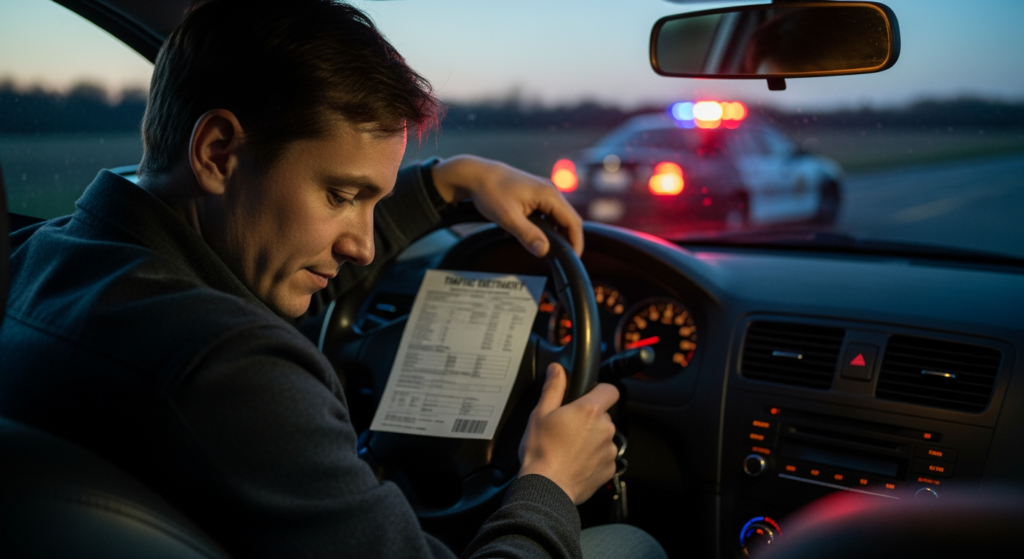
Facing a reckless driving charge can be confusing because people often mix it up with other traffic offenses like speeding, careless driving, or aggressive driving. This guide is for drivers, family members, and anyone trying to understand what the accusation generally means, how it’s commonly treated in court, and why the details matter. Even when no crash occurs, allegations tied to “reckless” conduct can carry higher stakes than a routine ticket, including license consequences, court requirements, and long-term ripple effects. As spring brings more cars back onto the road, it’s a good time to understand how these charges are typically framed and what questions to ask if you’re cited.
For a broader foundation on how criminal cases and court procedures often work, see Understanding Criminal Defense Procedures: Key Concepts and Framework.
The Essentials: Key Differences at a Glance
- It’s usually about risk, not just speed: A “reckless” allegation often focuses on creating a substantial risk to others, not merely exceeding the limit.
- It can be treated more seriously than typical tickets: Depending on the jurisdiction, it may be handled as a misdemeanor or a criminal-style traffic offense rather than a simple infraction.
- The facts and wording matter: The officer’s observations, road conditions, and what you allegedly did (and why) can shape how the case is charged.
- Consequences may extend beyond court: License points/suspension, insurance impacts, and employment background concerns can follow.
- Similar labels aren’t the same thing: “Careless,” “aggressive,” “exhibition,” and “reckless” driving can have different legal definitions and proof requirements.
How Reckless-Style Driving Allegations Are Commonly Defined
In plain terms, reckless driving is typically alleged when a driver is said to operate a vehicle with a serious disregard for safety. The exact legal definition varies by state, but the theme is usually the same: the conduct is portrayed as more dangerous than ordinary negligence.
Reckless vs. careless vs. negligent driving
Many states separate everyday mistakes (often described as “careless” or “negligent”) from behavior considered more extreme (“reckless”). Careless/negligent allegations often focus on inattention or a momentary lapse. Reckless allegations more often focus on a conscious disregard of risk or conduct that is inherently dangerous under the circumstances.
Reckless vs. speeding (and why speed alone may not settle it)
Speeding is typically a strict, number-based offense: how fast you were going compared to the posted limit. A reckless allegation may include speeding, but it often adds context—traffic density, weather, visibility, proximity to pedestrians, weaving, tailgating, or other behaviors that increase danger.
Reckless vs. aggressive driving
Some jurisdictions use “aggressive driving” as a separate label, sometimes tied to a pattern of multiple violations (for example, speeding plus unsafe lane changes). Where that exists, it may be charged differently than reckless driving even if the conduct sounds similar in everyday conversation.
Practical example: Two drivers are clocked at the same speed. One is on an open highway with clear visibility; the other is alleged to be weaving through dense traffic near an intersection. The second situation is more likely to be described as creating a heightened risk, which can influence what’s charged.

Why the Differences Matter: Real-World Consequences
Traffic offenses aren’t all “just tickets.” When an accusation is framed as reckless, the process and consequences can change in ways that affect your time, finances, and record.
- Time and logistics: You may need to appear in court, request discovery, or attend multiple hearings rather than simply paying a fine.
- License impact: Points, suspensions, or restrictions can be on the table depending on local law and driving history.
- Insurance costs: Insurers may treat serious moving violations differently than routine infractions, potentially affecting premiums.
- Employment and background checks: Some roles (commercial driving, delivery, healthcare, education, security) may scrutinize driving-related offenses.
- Collateral stress: Transportation to work, childcare schedules, and travel plans can become complicated if your license status is affected.
Common Missteps That Make These Cases Harder (Checklist)
- Assuming it’s the same as a speeding ticket: Treating it casually can lead to missed court dates or missed opportunities to understand the charge.
- Over-explaining on the roadside: Long explanations can unintentionally create statements that are later misunderstood or taken out of context.
- Ignoring the conditions described in the citation: Details like traffic level, weather, and location often matter to how the allegation is framed.
- Not preserving what you can: Waiting too long to note your recollection, identify potential witnesses, or save relevant information (like dashcam footage) can reduce clarity later.
- Missing deadlines: Court appearance dates, payment deadlines, and administrative steps can carry consequences if overlooked.
- Posting about the incident publicly: Social media commentary can be misinterpreted and may complicate matters.
A Smart Preparation Checklist Before Court
- Read the citation carefully: Note the exact charge name/section, alleged behavior, and the date/time/location listed.
- Write down your timeline: Capture your best recollection while it’s fresh (route, traffic, visibility, reason for lane changes, etc.).
- Gather neutral documentation: If available, preserve dashcam video, phone GPS history, repair receipts (if relevant), and photos of the roadway conditions.
- Check your driving record: Prior points/violations can affect how the case is handled in some jurisdictions.
- Plan for logistics: Confirm the courthouse location, arrival time, parking, and any restrictions on phones or bags.
- Prepare questions for a lawyer: Ask how this offense is classified locally, what proof is typically needed, and what outcomes are commonly available in that court.

Professional Insight: What Most People Miss Early On
In practice, we often see that the biggest turning point is not a single dramatic fact, but the context: how the roadway was described, what the officer says they observed, and whether the driver’s account is organized and consistent. When people wait until the last minute, small details that could clarify what happened—traffic flow, signage, visibility, or why a maneuver occurred—are harder to reconstruct.
When It’s Time to Talk to a Criminal Defense Attorney
Because a reckless-style allegation can be treated more seriously than a routine citation, many people choose to at least consult an attorney when any of the following are true:
- You’re required to appear in court: A mandatory appearance is a sign the matter may not be handled like a standard payable ticket.
- There was a crash, injury, or property damage: Added facts can raise the stakes and complexity.
- Your license is at risk: If you drive for work or have prior points, the practical impact can be significant.
- The citation includes multiple violations: A bundle of allegations can change negotiation and proof dynamics.
- You’re unsure what the charge means locally: Definitions and classifications vary by state and sometimes by court practice.
Educational note: This article provides general information, not legal advice. For advice about your specific situation, consider speaking with a qualified attorney in your jurisdiction.
Common Questions Answered
Is this type of driving allegation always a criminal offense?
No. How it’s classified depends on the state and the specific statute. In some places it may be treated as a misdemeanor or quasi-criminal traffic offense; in others it may be handled within traffic court but still carry enhanced penalties.
Can the same incident lead to more than one traffic violation?
Yes. A single stop can result in multiple citations (for example, speed-related and lane-related violations). Whether multiple charges apply depends on local law and what the officer alleges occurred.
What kinds of evidence are commonly discussed in court?
Commonly discussed items can include the officer’s observations, any available video (dashcam/bodycam/traffic camera), witness statements, diagrams of the roadway, and documentation about conditions at the time of the stop.
Will my insurance automatically go up?
Insurance impacts vary by insurer, policy, and the final disposition of the case. A serious moving violation can be treated differently than a minor infraction, but outcomes are not uniform.
Should I just pay the ticket to get it over with?
Paying may be treated as resolving the citation, and in many jurisdictions it can function like a plea to the charged offense. Because consequences can extend beyond the fine, many people first confirm what paying means where the ticket was issued.
Where to Go from Here
A reckless driving charge is often distinguished from ordinary traffic tickets by the level of risk the conduct is alleged to create and by how the offense is classified in your state. Understanding the label on the citation, the facts the officer recorded, and the potential collateral consequences can help you ask better questions and avoid preventable mistakes. If you’re unsure how your local court treats this type of allegation, a consultation with a qualified attorney can clarify the process and what to expect.
Learn More About Our Services
Discover how we can help you achieve your goals.