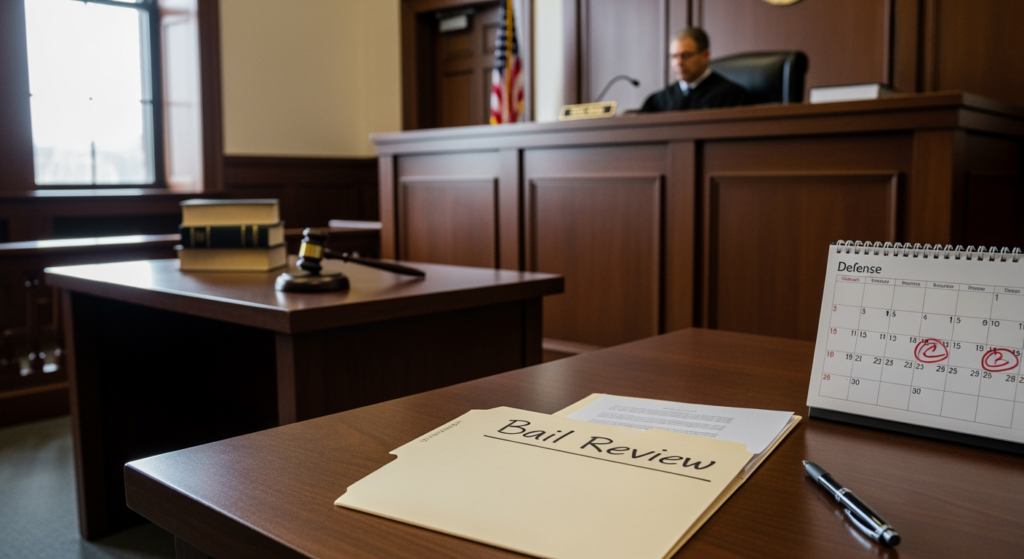
Facing a court date while someone you care about remains in custody can feel like the clock is running twice as fast—especially in summer, when family plans and work schedules don’t pause for legal paperwork. If you’re trying to understand what a bail review hearing is and how to prepare for one, this guide walks you through the process in plain language. This topic matters because a review can change the conditions of release, which affects day-to-day life, employment, childcare, and the ability to help build a defense. The goal here is education: what typically happens, what information courts often consider, and how to stay organized. For a broader foundation on pretrial procedures, see Understanding Criminal Defense Procedures.
Important: This article is general information, not legal advice. Procedures and standards can vary by jurisdiction, and only a qualified attorney can advise you on a specific case.
The Essentials Before You Start
- A bail review hearing is a court proceeding where a judge re-examines release conditions set earlier (including bail amount or non-monetary conditions).
- You generally need a clear reason to ask for review—often a change in circumstances or new information.
- Preparation usually focuses on documentation: ties to the community, stable housing, employment, and a plan to comply with conditions.
- Courts commonly weigh public safety and court-appearance risk when deciding whether to modify conditions.
- Even when bail isn’t eliminated, a review may result in adjusted terms (different amount, different supervision, or added/removed restrictions).
How a Bail Review Hearing Typically Works (Step-by-Step)
You will achieve a clearer, practical plan for requesting a review and organizing information that is commonly relevant in a pretrial release decision.
Prerequisites (what to have ready)
- Basic case details: the court, case number, current release conditions, and the date they were set.
- A stated basis for review: what changed or what the court may not have had at the initial setting.
- Supporting documents: items that help explain stability and compliance planning (examples below).
- A realistic release plan: where the person will live, how they’ll get to court, and how they’ll follow conditions.
-
Confirm what the current release conditions are.
Start by identifying exactly what the court ordered: bail amount (if any), reporting requirements, travel limits, no-contact orders, monitoring, or other restrictions.
- Tip: Ask for a copy of the written order if you don’t already have one; relying on memory creates avoidable confusion.
- Tip: Note any deadlines (for example, reporting timelines) so you don’t accidentally violate a condition while seeking review.
-
Identify the specific reason you’re requesting a review.
A review request is usually stronger when it is tied to something concrete: new information, corrected information, or a meaningful change since the prior decision.
- Tip: Write the reason in one sentence first, then expand it into a short outline with supporting facts.
- Tip: Keep it focused on pretrial release factors (appearance in court and safety concerns), not a full argument about guilt or innocence.
-
Gather documents that support stability and a compliance plan.
Courts often look for practical indicators that a person can follow conditions and appear for court. The exact items that help can vary, but common categories include housing, work, family responsibilities, and treatment or counseling plans when relevant.
- Tip: Bring copies, not originals, when possible—and keep a simple index page so you can find items quickly.
- Tip: If you’re using letters of support, prioritize specificity (how the writer knows the person, what support they can provide) over emotional appeals.
Examples of materials people often organize (not a required list):
- Proof of residence (lease, utility bill, letter from household member)
- Employment verification or job offer letter
- School enrollment documentation
- Childcare/family caregiving responsibilities documentation
- Treatment intake appointment confirmation (if relevant)
- Transportation plan for court dates (who will drive, public transit route, etc.)
-
Prepare what you (or counsel) will say in court.
A bail review hearing is usually short and structured. The judge may ask targeted questions, and the other side may respond. A clear, organized presentation helps the court understand the request quickly.
- Tip: Practice a 60-second summary: current conditions, what changed, what you’re asking the judge to modify, and why it addresses court concerns.
- Tip: Be ready to explain how any proposed conditions would work day-to-day (for example, how reporting or monitoring would be handled).
-
Attend the hearing and follow courtroom expectations.
Depending on the court, the person in custody may appear in person or remotely. The judge will consider the request, ask questions, and issue a decision—sometimes immediately, sometimes after brief consideration.
- Tip: Arrive early, dress neatly, and keep your materials organized. Small logistical issues can derail a short hearing.
- Tip: If you don’t understand a condition the judge mentions, it’s generally better to ask for clarification than to guess later.
-
Get the updated order in writing and build a compliance checklist.
If the judge changes anything, confirm the final conditions in the written order. Then translate those conditions into a simple checklist with dates, addresses, and contact information.
- Tip: Put court dates, reporting dates, and no-contact boundaries into a calendar immediately.
- Tip: Keep proof of compliance (receipts, check-in confirmations, program attendance logs) in one folder.

What You Risk by Waiting (Time, Money, and Momentum)
Delays around pretrial release decisions can have real-world effects beyond the courtroom. If someone remains in custody, it may become harder to keep a job, maintain housing, care for family, or participate fully in preparing a defense. Even when bail is posted, restrictive conditions can affect work schedules, travel, and communication—especially when no-contact or location limits are involved.
There can also be financial strain: paying for phone calls, arranging childcare, missing work, or covering bail-related costs where applicable. Just as importantly, waiting without a plan can lead to accidental missteps—like missed check-ins or misunderstandings about restrictions—that create additional legal complications.
Common Missteps That Derail a Review Request (Checklist)
- Showing up without the current written order: It’s hard to ask for a specific modification if you can’t quote the existing conditions accurately.
- Leading with emotion and skipping the release plan: Courts often want practical details: where the person will live, how they’ll get to court, and how conditions will be followed.
- Submitting vague support letters: “They’re a good person” is less helpful than specific support (housing, transportation, supervision, reminders).
- Arguing the entire case at the hearing: A review is typically focused on release conditions, not a full trial preview.
- Overpromising: Proposing unrealistic conditions (or commitments you can’t actually maintain) can undermine credibility.
- Ignoring no-contact or location limits while waiting: Violations—intentional or accidental—can become a major obstacle to modification.
A Smart Preparation Checklist for Pretrial Release Review
- Create a one-page case summary: current conditions, the requested change, and the reason for review.
- Build a “release plan” packet: housing, employment, transportation to court, and support contacts.
- Collect verification documents: letters, schedules, and confirmations that can be quickly understood.
- Draft a compliance calendar: court dates, check-ins, program appointments, and reminders.
- Prepare a short, respectful script: what you’re asking for and how it addresses court concerns.
- Plan for alternatives: if the judge won’t remove bail, consider whether a different condition set (when available) would still help.

Professional Insight: What Most People Miss About These Hearings
In practice, we often see that the most persuasive requests are the ones that translate “support” into logistics—specific people, addresses, schedules, and a realistic plan to comply—rather than broad character statements or last-minute document dumps.
When It’s Time to Talk to a Lawyer
Because rules and standards can vary by jurisdiction—and because pretrial conditions can carry serious consequences—it may be time to consult a qualified criminal defense attorney if:
- The current conditions are confusing, unusually restrictive, or difficult to comply with.
- There is a no-contact order, alleged violation, or any risk of misinterpretation of the restrictions.
- The case involves allegations that raise heightened safety concerns in the court’s view.
- You’re unsure what qualifies as “new information” or “changed circumstances” in your court.
- You need help presenting a clear release plan and organizing supporting documentation.
Frequently Asked Questions About Pretrial Release Reviews
Is a pretrial release review the same thing as an appeal?
Not necessarily. A review typically asks the court to reconsider release conditions based on the applicable rules and the information available, which may include changes since the earlier decision. An appeal is a separate process with its own standards and timelines.
What kinds of information usually matter most to the judge?
Courts often focus on whether the person is likely to appear for future court dates and whether there are safety concerns. Documentation that supports stable housing, reliable transportation, and a realistic compliance plan is commonly relevant.
Can conditions change even if bail isn’t removed?
Yes. In some situations, a court may adjust the amount, add or remove non-monetary conditions, or clarify restrictions. What’s available depends on local rules and the facts presented.
Will support letters from family and employers help?
They can, especially when they are specific and verifiable—such as confirming housing, employment, transportation, or supervision support. Generic letters may carry less weight than concrete details.
What should you do right after the judge makes a decision?
Confirm the final conditions in the written order and create a simple checklist for compliance (dates, addresses, and contact information). If anything is unclear, it’s generally better to seek clarification than to assume.
Where to Go from Here
A bail review hearing is typically about clarity and practicality: what the current conditions are, what has changed, and what plan is in place to address the court’s concerns. If you prepare documents, organize a realistic release plan, and avoid common pitfalls, you’ll be better positioned to navigate the process. Because procedures vary by jurisdiction and each case is fact-specific, consider speaking with a qualified attorney for guidance tailored to your situation.
Book Your Consultation
Schedule a free consultation with our experts.